Fellow Spotlight: How Four Fellows Are Promoting the Power of Exercise
December 23, 2025 2025-12-23 20:46Fellow Spotlight: How Four Fellows Are Promoting the Power of Exercise
By: Javacia Harris Bowser
Physical activity has the power to help people manage their weight, strengthen their bones and muscles, boost their mood and reduce risks of illnesses such as cardiovascular disease, diabetes and even some cancers. In short, exercise can help people live longer and better lives. That’s why promoting physical activity in underserved communities is a passion for Albert Schweitzer Fellows Sophia Fox, Grace-Anna Perry, Bre McDonald and Li’an Williams.
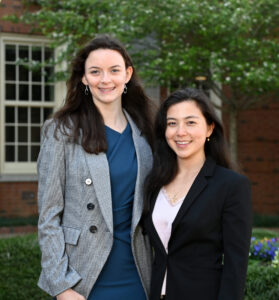
Sophia Fox and Grace-Anna Perry
Could a Zumba class change a person’s life? Albert Schweitzer Fellows Sophia Fox and Grace-Anna Perry are proving the power of exercise and physical activity through their ASF project.
The two UAB Heersink School of Medicine students have partnered with Cahaba Medical Care of West End to offer weekly fitness classes to patients. Before they started their project, Sophia and Grace-Anna talked with several healthcare professionals who work with underserved populations.
“We were asking what they saw the greatest need was,” Grace-Anna said, “and it was that they need a place to go and learn how to work out and learn how to live a healthier life.”
According to statistics gathered by Alabama Public Health, over one-third of Alabama adults are obese. Obesity is a risk factor for hypertension, diabetes, heart disease, sleep apnea, mental illness, and osteoarthritis. Regular exercise and physical activity can reduce the risk of many chronic diseases. However, United Health Foundation reports that only 25 percent of Alabamians meet the federal physical activity guidelines (150 minutes of moderate or 75 minutes of vigorous aerobic activity and two days of muscle strengthening per week).
But Sophia and Grace-Anna are working to change those statistics one Zumba class at a time.
“I love hearing their updates,” Grace-Anna said of the fitness class participants, many of whom were referred to the class by their doctors. “This is them taking the next step.”
The weekly Zumba classes are just a piece of the puzzle.
“The participants talk to each other before and after class, so I can see that we’ve built a little community within the community,” Sophia shared. They’ve even started a group chat via the GroupMe app, through which participants share with one another other free exercise programs they learn about. Sophia and Grace-Anna also share exercises they can do at home.
Participants celebrate reaching weight loss milestones. Motivated by the Zumba class, one participant also started running daily to take her fitness regimen to even higher heights. Another participant who had recently ended an 11-year relationship found that exercise helped her cope with a tough time.
Furthermore, before each class, Sophia and Grace-Anna give short presentations on various health topics. A recent talk was about the importance of vitamin D in preventing osteoporosis.
To measure impact, Sophia and Grace-Anna are having participants complete a fitness test and a survey before they start the classes and after at least five sessions. While the fitness test will measure activities such as how far they can walk in 6 minutes and how many times they can stand up from a chair in a minute, the survey will assess the participants’ attitudes toward exercise.
“Just talking to the participants, and seeing how our class influences their mood, and seeing how happy they are leaving, it’s made me really happy,” Sophia shared. “It has influenced the direction I see myself going in medicine. We spend a lot of time talking with the people who come into our class about their health goals and their life in general. Getting to talk to them has definitely made me realize that I want to be able to talk a lot to my patients, and I really would like to have a longitudinal relationship with them. So I’ll probably find a career medicine that allows me to do that.”
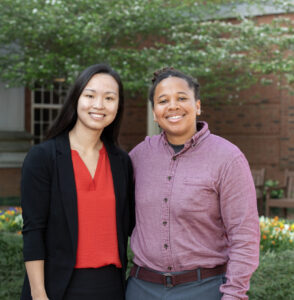 Bre McDonald and Li’an Williams
Bre McDonald and Li’an Williams didn’t know each other before their Albert Schweitzer Fellowship. Bre is a pursuing a doctorate in nutrition science from the UAB School of Health Professions. Li’an is a student at UAB Heersink School of Medicine. But they both believe in the power of exercise and decided to team up for their ASF project.
Working with Live HealthSmart Alabama’s mobile clinics, Bre and Li’an have developed informational handouts on six different types of exercises: upper body strength, lower body strength, core strength, chair-based exercise, cardio and endurance, and stretching and flexibility.
“We spent the first few months doing a needs-based assessment with the community, having conversations and asking people what kind of barriers they had toward physical activity and getting a feel for what kind of things they would like to see in our handouts,” Li’an explained. “We really designed these to be something that people can do from the comfort of their own home with minimal resources.”
Bre believes knowledge is the first step toward change.
“I believe this is something they will take home and use and hopefully share with other people,” Bre said. “Being able to just share information is impactful.”
Li’an recalled a patient who had been actively working to lower his A1C by exercising regularly. But a recent cataract surgery meant he couldn’t go to water aerobics for months.
“He’s really excited about these handouts of things that he could do at home,” Li’an said. “It’s very exciting to see these patients be motivated and empowered to make these lifestyle changes.”
And the patients aren’t the only ones feeling motivated by this project.
“It’s a very enriching experience,” Bre said of the Albert Schweitzer Fellowship. “I’m able to learn more about the community in which I live now, which is Birmingham, and it also introduces a lot of things that I may not otherwise know about or be exposed to, if I were just primarily working in the lab and not doing service work. I think it’s really important that I’m doing this now because it’s fueling my desire to have more impact in the public health space.”