Malik Seals & Margaret Lloyd
November 10, 2025 2025-12-06 18:58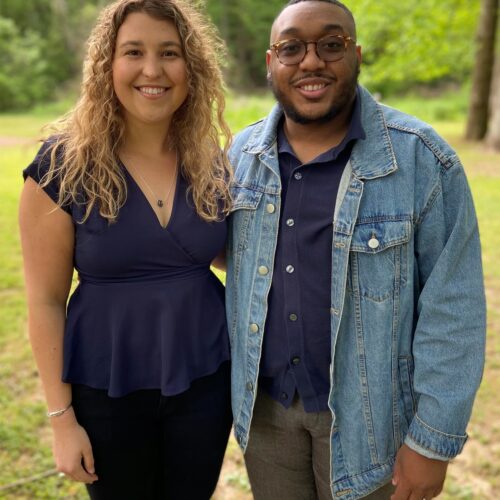
Malik Seals & Margaret Lloyd
Academic Mentor: Dr. Richard Kennedy
Site Mentor: Marcy Morgenbesser
Site: Collat Jewish Family Studies
We met with each participant individually to establish a baseline of technological proficiency. We then met with the participants one-on-one weekly to deliver personalized instruction at their level and pace. In addition they conducted weekly zoom sessions with the cohorts, so they could utilize their new technology/zoom skills while engaging and learning in a group setting. Finally, they created online resources (e.g., a google doc of FAQs, personalized “one-pagers” for each participant on how to navigate their favorite applications; etc.) to ensure participants could continue using technology after their 8-week session was over. Based upon additional interest, Malik and Margaret started a second session with a new cohort of participants who will be paired with volunteers they recruited to continue the program.
As a result of the program:
- All 7 participants in the programs have quantitatively improved their technological literacy.
- They helped lower one participant’s phone bill by $60/month and saved another participant $20/month on subscription fees.
- Individuals now use technology independently to connect to healthcare resources (2), such as COVID-19 tests; to order groceries using an online service (3); and for arranging transportation (1).
- Two participants now have access to technology that they never had before (chromebook and smart phone) and are learning quickly how to utilize them.
To sustain the project, Margaret and Malik have created a mini video series shared with our community partner for future use with staff training. They are also seeking volunteers within the UAB medical school to take over their project.
“As an Albert Schweitzer Fellow, my time has exposed me to my sometimes narrow way of thinking. At the beginning of the fellowship, I had everything planned out in excruciating detail; however, I did not seek input from the community that I was attempting to benefit; not only did my project require significant adjustments, but I did not gain insight from the participants on what they wanted from the program. The entire experience has been enlightening, especially as someone interested in the intersection of medicine, research, and public health; these fields require being able to accurately appraise the community’s needs, solicit feedback, and develop evidence-based solutions to address those needs. It wasn’t about the data we collected; instead, it was the smile on the participant’s faces as they regained their autonomy.”- Malik
“The Alabama Schweitzer Fellowship has taught me that impact is not always about the big numbers. Impact is serving others in a capacity that meets both the participant’s and volunteers’ needs while building a relationship during that process. Impact is hidden in the small moments like progress towards a goal or building trust with a participant. As a future medical professional, I want to serve my patients in a holistic manner where my patients feel comfortable discussing their needs and not just their symptoms.” Marge
Powered By EmbedPress