What Inspires the 2026-2027 Albert Schweitzer Fellows of Alabama (Part 1)
April 7, 2026 2026-04-07 20:07What Inspires the 2026-2027 Albert Schweitzer Fellows of Alabama (Part 1)

The 2026-2017 Albert Schweitzer Fellows of Alabama make us our largest class of fellows yet. And though these 25 students may hail from different schools and focus on different fields of study, they all have one thing in common – they’re committed to serving their communities.
In this two-part series, we ask the 2026-2027 Fellows what inspired their commitment to service and what issues in their community motivate most to take action. Here’s what 12 of our new Fellows had to say.
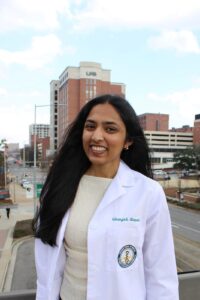 Gitanjali Alapati, UAB Heersink School of Medicine
What moment inspired your commitment to serving others?
My commitment to serving others is not based on a single moment, but rather a series of experiences over the years, which started with watching my family. My grandfather was a high school teacher and principal at a rural school in India. He believed deeply in the power of education and made it a personal mission to ensure that every child in the village had the opportunity to attend school. Similarly, my aunt works as an OB/GYN in a rural hospital in India, where she goes above and beyond to provide care for women who would otherwise have very limited access to medical services. Watching both of them, I can’t help but be in awe of their sense of purpose that is quiet but powerful. They showed me that meaningful impact often comes from consistently showing up for a community and working to meet its needs over time.
What problem in your community keeps you up at night, and what do you hope to do about it?
I am interested in working toward building healthier lifestyles by increasing the amount of conversation that happens in everyday households about what it means to live a healthy life. Many health issues are influenced by modifiable risk factors, yet conversations about prevention often happen too late or only in clinical settings. My goal is to better understand community needs and concerns on a behavioral level and then work alongside communities to find solutions that meet those needs.
 MaKayla Armstrong, UAB School of Public Health
What moment inspired your commitment to serving others?
A moment that inspired my commitment to serving others was when I began working directly with underserved communities and saw how many people lacked access to basic needs. Through these experiences, my eyes opened to realities that are often overlooked, including the barriers that prevent individuals from receiving care and support. Through those moments, I realized that I wanted to dedicate my work to serving others and improving health equity in underserved communities.
What problem in your community keeps you up at night, and what do you hope to do about it?
One issue in my community that keeps me up at night is the gap in access to preventive care for underserved women. Many women are unable to get early screenings or treatment because of a lack of access to care, resources, and support. I hope to address this by creating community-based initiatives that bring health education and resources to women in safe, trusted spaces, such as women’s homeless shelters. My goal is to increase education and support for women to take control of their health.
 Caroline Bald, UAB Heersink School of Medicine
What moment inspired your commitment to serving others?
My commitment to serving others was shaped during a week of volunteering at a preK–12 school in a low-resource community in Trenton, New Jersey. My team spent the week transforming a storage space into an art room for students. When the students ran in and saw the finished space, their excitement was unforgettable. School had always been a safe and encouraging place for me growing up, so it meant a great deal to help create that same kind of space for others. That experience showed me how meaningful service can be when it responds to a real need, and it inspired me to pursue a career centered on serving others in thoughtful, community-based ways.
What problem in your community keeps you up at night, and what do you hope to do about it?
What keeps me up at night is how financial hardship can keep people from getting the healthcare they need. Living in Alabama has made me especially aware of how often the cost of care delays treatment in communities facing significant economic strain. During one of my college internships, I met a woman with stage 4 cancer whose treatment had been delayed because she could not afford timely care. My goal is to be a physician who not only provides thoughtful clinical care, but also helps make care more accessible through education, community engagement, and advocacy.
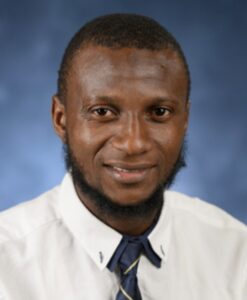 Abdulhakeem Binhambali, Tuskegee University
What moment inspired your commitment to serving others?
Growing up in an underrepresented community, I experienced the systemic barriers that can make even the most modest goals feel out of reach. This realization has transformed my approach to both my personal and professional life. In every environment I enter or find myself, I see myself as an ambassador for my community.
What problem in your community keeps you up at night, and what do you hope to do about it?
The persistent low awareness of cancer in my community is a problem that keeps me up at night. In many underrepresented areas, there is a dangerously low awareness of how the immediate environment, from local pollutants to lifestyle factors, directly impacts long-term health. This lack of information creates a cycle of late-stage diagnoses and preventable tragedies, as many individuals remain unaware of the exposure their environment is exposing them to. To address this, I am committed to launching a structured, data-driven awareness initiative. My goal is to shift the narrative from fear to empowerment, ensuring that every community member has the tools to protect their health.
 Kailand-Ascia Brown, UAB Heersink School of Medicine
What moment inspired your commitment to serving others?
My commitment to serving others was shaped over time through my experiences growing up in rural Alabama and later through my exposure in the healthcare field. One moment that stands out was shadowing a physician in my hometown who seamlessly transitioned between family medicine clinic, hospital rounds, and nursing home check-ins, all while caring for patients they had known for years. Seeing the trust within those relationships and the impact one physician could have across an entire community showed me that medicine is more than treatment, it is service, connection, and advocacy.
What problem in your community keeps you up at night, and what do you hope to do about it?
One issue that weighs heavily on me is the limited access to healthcare in rural and underserved communities. Many individuals face barriers such as financial strain, transportation limitations, a lack of nearby facilities, and limited health education, all of which can lead to delayed care and poorer health outcomes. I hope to address this by practicing in a rural or underserved area while prioritizing patient education and preventive care. Beyond clinical care, I aim to be involved in community-based initiatives that improve access, build trust, and empower individuals to take an active role in their health. My goal is not only to provide care, but also to contribute to improved health outcomes, reduced mortality, and a better overall quality of life in communities facing healthcare disparities.
 Nar’Kiyah S. Butler, Auburn University Harrison College of Pharmacy
What moment inspired your commitment to serving others?
My first volunteering opportunity (that I can remember) was when I was in 7th grade at the Christian Service Mission in Birmingham, AL. The entire time we were assigned to sort donations they received. Even though it seemed like something miniscule to a 13-year-old, this experience motivated me to search for more opportunities where I could serve.
What problem in your community keeps you up at night, and what do you hope to do about it?
Right now, the lack of healthcare access across the state of Alabama is disheartening. I have lived in three cities in Alabama: Birmingham, my hometown; Troy, my college town; and now Auburn-Opelika. Although Birmingham is home to a large academic center, the community still faces access issues as it relates to transportation and health literacy. For Troy and Auburn-Opelika, the community must travel at least an hour to a different city to get proper specialist care if they do not have one in town. Health literacy plays a large part in maintaining access to healthcare. My plans are to raise awareness surrounding various healthcare topics and break them down simple enough to where community members can understand.
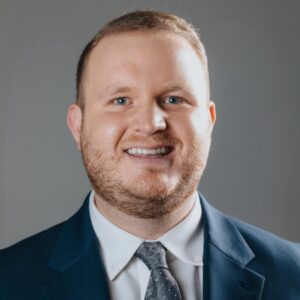 Dylan Carpenter, UAB School of Nursing
What moment inspired your commitment to serving others?
My commitment to serving others was shaped long before my professional career began. Growing up, I spent time helping members of my community alongside my Paw. His selflessness showed me the importance of showing up for others. That value became deeply personal during my bachelor’s program when I experienced housing insecurity. During that difficult time, it was the generosity and compassion of others that helped me regain stability and continue my education. Those experiences continue to guide me today as a healthcare professional. They motivate me to give back in meaningful ways and advocate for individuals facing vulnerability, disparities, and hardship.
What problem in your community keeps you up at night, and what do you hope to do about it?
The problem that keeps me up at night is the number of preventable and treatable wounds I see in my community. In Alabama, many individuals develop wounds that could be avoided or managed early with education and access to basic resources, yet too often these conditions progress to severe infection or amputation. During my time as an Albert Schweitzer Fellow, I plan to focus on individuals experiencing homelessness, who face significant barriers to prevention and treatment. My goal is to provide practical education and support that empowers individuals to take daily steps to protect their health, recognize early warning signs, and ultimately reduce preventable complications.
 Christopher Colvin, UAB School of Health Professions
What moment inspired your commitment to serving others?
My commitment to service took root on the wrestling mat. The sport gave me formative lessons not just in athletics but in how to face adversity, hold yourself accountable, and keep going when the easy choice is to quit. When I started coaching wrestling, I realized I could pass those lessons to kids who needed them. I had received something real through this sport, and I could pay it forward.
What problem in your community keeps you up at night, and what do you hope to do about it?
Food insecurity in my community is a deep concern of mine, not just because people are going hungry, but because hunger quietly dismantles everything else. It undermines day-to-day life, from the ability to perform at work or at school, to a constant worry on how to make it to the next meal. I hope to do more than distribute food. Through pop-up cooking events paired with simple, nutritious recipes and hands-on demonstrations, I want to give people not just a meal, but a skill set they can carry forward.
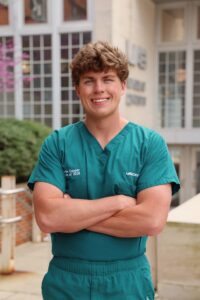 Carter Cooper, UAB School of Dentistry
What moment inspired your commitment to serving others?
Instilled in my childhood was the golden rule: treat others as you would like to be treated. When I put myself in the shoes of someone who is in need, I know I would love for someone to help me out. I am blessed to where I can have that positive impact on someone’s life. Jesus showed us how to live a life serving others. One scripture that stands out to me is when Jesus washes the feet of his disciples. If the Creator of the universe can serve others, then surely, I can too.
What problem in your community keeps you up at night, and what do you hope to do about it?
Something that I wrestle with is how so many kids are in desperate need of dental care but lack the resources to seek treatment. That is what my ASF project is all about. It is educating on how to prevent cavities before they can begin, specifically homing in on fluoride and why it is so essential for our oral health. It is spreading the facts about how fluoride stops bacteria from chewing away your tooth. With this knowledge, hopefully there will be more children taking adequate care of their teeth with fluoride and less children needing dental work who cannot afford it.
 Dezirae Cunningham, Samford University McWhorter school of Pharmacy
What moment inspired your commitment to serving others?
My commitment grew while working in oncology research. I saw how much patients relied on us during some of the hardest moments in their lives. One patient really stood out because of the trust they placed in our team. That experience showed me that healthcare is not just about treatment but about support and advocacy, and it pushed me to want to serve others in a meaningful way.
What problem in your community keeps you up at night, and what do you hope to do about it?
I think about the lack of preventive care awareness among young adults, especially those with underlying conditions. Many people delay care until it becomes serious. I want to address this through education and simple outreach like short surveys and community engagement to understand barriers and improve access to prevention.
 Deeksha Hanumanula, UAB School of Public Health
What moment inspired your commitment to serving others?
Growing up, I would regularly participate in community service through the multi-faith spiritual organization I was a member of. My favorite service activity that I looked forward to was recycling eyeglasses. I loved the meticulous process of washing the eyeglasses, drying, sorting, and packaging them. At the time, service had always been an act of doing, instead of focusing on the intention behind the act. The day that perspective changed was when I remember seeing a video sent back to us of people who had received the eyeglasses we had refurbished. One child was describing how having these eyeglasses had helped her start reading her favorite books again and helped her keep up in school. At that moment, it finally clicked for me how something as little as these glasses that we spent one weekend cleaning could help others in a way that would allow them to experience the world more clearly. Now, I serve others with the intent of making these impacts, which may seem little at first, but can carry tremendous weight.
What problem in your community keeps you up at night, and what do you hope to do about it?
Maternal mortality and adverse pregnancy outcomes resulting from healthcare inequities are issues that weigh heavily on me. Despite major advancements and groundbreaking findings in medical research and treatment today, it is disheartening that pregnancy remains an unsafe experience for many people in our community. I hope to address this issue through education and community engagement. Making community members aware of the resources and tools that are available to them would be an important first step in reaching the individuals who may have disparities in access to adequate maternal care.