Fellow Spotlight: Addressing Substance Misuse One Student at a Time
September 8, 2026 2026-09-08 19:28Fellow Spotlight: Addressing Substance Misuse One Student at a Time
It all started with a television miniseries.
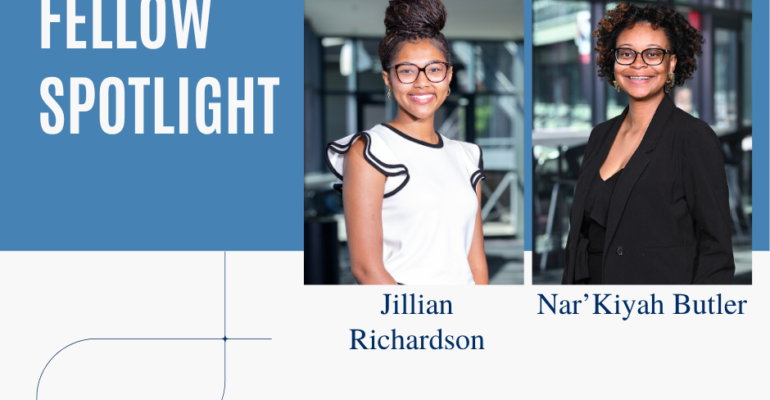
After Nar’Kiyah Butler watched the show Dopesick, which premiered on Hulu in 2021, she couldn’t stop thinking about the opioid epidemic in America. So, it’s no surprise that as a student at Auburn University’s Harrison College of Pharmacy and an Albert Schweitzer Fellow, she’d want to devote her fellowship year to address substance misuse. For her project, she’s teamed up with Jillian Richardson, another pharmacy student at Auburn who is equally passionate about tackling the impact of substance misuse.
“As future pharmacists, we have seen firsthand how substance misuse affects our communities across Alabama,” Jillian said. “Whether through patients, families, or community members, we recognize the devastating impact that substance misuse and overdose can have on individuals and those around them. These experiences inspired us to focus our fellowship project on increasing awareness, reducing stigma, and providing education to help prevent substance misuse before it begins.”
For their project, Jillian and Nar’Kiyah are addressing substance misuse on Auburn University’s campus through prevention-based outreach aimed at reducing substance misuse risk through education, engagement, and safe medication practices.
“Substance misuse is a common problem among college campuses,” Nar’Kiyah said. “We want to make it known that we are not judging anyone for the decisions they make; we just want to make sure they have the proper information and resources to receive help if warranted.”
Their project will also promote safe storage and disposal of prescription medications in households across Alabama counties.
“We believe pharmacists are uniquely positioned to educate the public and connect people with valuable resources, and we hope to empower students with the knowledge and confidence to make informed decisions about their health,” Jillian said.
For their project, Nar’Kiyah and Jillian are planning several activities, including helping with Drug Take Back Day, which happens twice a year in October and April.
“Alongside law enforcement or pharmacies, we will help the community properly dispose of expired or unwanted medications,” Nar’Kiyah explained. “We also plan to hold tabling events each week in high-traffic locations on campus to spread awareness about our project.”
They’re also organizing several on-campus programs throughout the school year.
“We plan to host evening educational classes and discussions focused on substance misuse prevention, recognizing the signs of overdose, reducing stigma, and understanding how to support individuals affected by substance use disorders,” Jillian said.
They both stressed that their goal is to make these sessions engaging and interactive. They aim for the sessions to be discussions, not lectures.
“These sessions will provide students with a comfortable environment to ask questions and engage in meaningful conversations,” Jillian said. “Through partnerships with campus organizations and community stakeholders, our goal is to make these events engaging, interactive, and accessible to all students.”
They’ve already partnered with the Center for Opioid Research, Education, & Outreach [COACH] to hold naloxone demonstrations at the organization’s meetings and to meet other professionals passionate about addressing substance misuse.
Nar’Kiyah and Jillian are also working to create a variety of informational materials, including brochures, handouts, posters, social media content, and digital resource guides that they hope will continue to educate students long after their fellowship year has ended.
“We hope to make it easy for future student leaders to continue the work we have started,” Jillian said. “Our goal is to create a lasting culture of education, awareness, and support surrounding substance misuse on Auburn University’s campus.”
Though Nar’Kiyah hasn’t decided exactly what she wants her career to look like after she finishes pharmacy school in 2029, she feels confident that her Albert Schweitzer Fellowship experience will help prepare her to work with patients dealing with substance misuse.
“With the background this project will give me, I can support them in the best way possible,” she said.
Jillian believes the fellowship will help shape the work she’ll do in her career and in her community.
“Participating in the Albert Schweitzer Fellowship has strengthened my leadership, communication, and collaboration skills while reinforcing the importance of addressing public health challenges outside of the traditional healthcare setting,” she said. “This experience has shown me how meaningful education and community engagement can be in improving health outcomes, and it has prepared me to become a pharmacist who not only provides medications but also serves as an advocate, educator, and trusted resource for the communities I serve.”