Fellow Spotlight: Building Health Through Food & Movement
August 3, 2026 2026-08-03 15:11Fellow Spotlight: Building Health Through Food & Movement
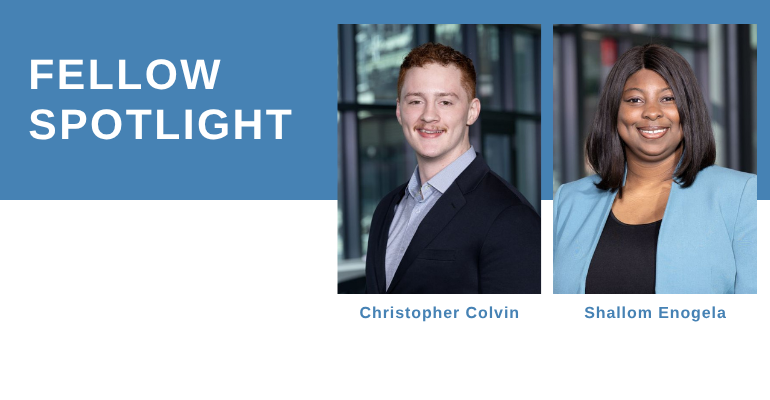
There’s no shortage of discussion online and elsewhere about diet and exercise. But for Albert Schweitzer Fellows like Christopher Colvin and Shallom Enogela, these topics aren’t about shedding a few pounds; they’re about improving overall health and quality of life.
Christopher, a student at the University of Alabama at Birmingham (UAB) School of Health Professions, is addressing food insecurity among Birmingham community members by strengthening the practical cooking and nutrition education resources available through Live HealthSmart Alabama’s Mobile Market. Shallom, a student at UAB School of Education and Human Sciences, is working with older adults to improve chronic pain management through exercise.
 Lead By Listening
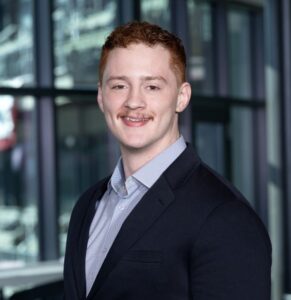
For Christopher Colvin, food insecurity is personal. He experienced it as a child. And this has driven his work as a student.
“This is also what set me on my academic path where I did a postbaccalaureate fellowship at the NIH studying diet quality and ultra-processed food environments, and now I’m a PhD student in Nutrition Sciences at UAB,” he said. “When I saw Live HealthSmart Alabama’s Mobile Market, pairing food access with cooking demonstrations across food-insecure locations in Birmingham, it felt like the right place to put both my personal experience and my research background to use.”
One key goal of Christopher’s project is to motivate community members to cook more.
“Cooking gives people control, not just over what they eat, but over their budget and their health,” Christopher shared. “Real nutrition interventions work best by adding to someone’s repertoire rather than taking things away: handing someone an easy, tasty recipe they can actually make gives them one more tool for eating well, and that sticks a lot longer than a list of foods to avoid. That’s the confidence that turns a recipe card into a lasting habit.”
As many Fellows must do, Christopher shifted the focus of his ASF project once he got started.
“I went in planning to measure cooking self-efficacy, but time in the field with the Mobile Market changed that,” he said. “I kept noticing that shoppers were very excited about the cooking demonstrations and recipe cards, but they had never been systematically evaluated, so the real need was building a ‘listening infrastructure’ into what they already do.”
He’s built a tracker to log market stops and survey responses, designed a short post-shop survey, and added a second data collection site at Live HealthSmart Alabama (LHSA) Mobile Wellness clinic.
“I’m now in active fieldwork, attending market stops and collecting responses, as well as recording the cooking demonstrations to keep in the LHSA library,” Christopher added.
Time in the field, interacting with shoppers has been invaluable.
“The moments that stick with me are the unscripted ones, whether it’s a shopper opening up about why cooking at home has been hard for them, or how they can’t wait to make this food at home for their kids to enjoy,” Chris said. “Those conversations and moments have taught me about the real barriers, and they’re what pushed me to reframe the whole project around listening.”
Listening, Christopher said, must be at the core of nutrition education and efforts to address food insecurity.
“Someone can have enough calories and still lack access to food that’s affordable, nutritious, and something they know how to cook,” he said. “The recipes at our demonstrations use ingredients shoppers can get right there at the market, so people are leaving with both the food and the education. My role is figuring out everything in between: what’s actually stopping someone from turning that recipe into a meal at home.”
And the only way to figure this out, he said, is by listening.
Because of this focus on listening, Christopher is confident that the time spent on his ASF project will help prepare him for the work he wants to pursue in the future.
“I want to keep working at the intersection of nutrition research and community health, turning my metabolic research into usable public health nutrition,” he explained. “My PhD research is on metabolic phenotyping, but this project has taught me how to build programs with a community instead of for them, and how to lead by listening first. That’s a skill I’ll carry into whatever comes next.”
 Exercise Is Medicine
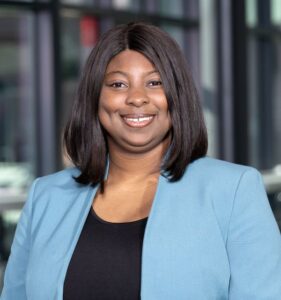
For Albert Schweitzer Fellow Shallom Enogela, the phrase “Exercise is medicine” is not some catchy quote she saw on social media. This belief fuels her work.
“‘Exercise is medicine’ sounds simple, but it carries a powerful message,” Shallom said. “I believe exercise is medicine because it is one of the most sustainable ways to care for the human body.”
For her ASF project, Shallom is working with older adults grappling with chronic pain. Her goal is to help participants build confidence in everyday movement through low-impact activity, mobility routines, and journaling.
“For older adults living with chronic pain, the right type of movement can help relieve stiffness, improve function, and support overall well-being,” she explained.
For the project, participants will set movement goals – such as 30 minutes of movement, 3 times a week – and through a six-week educational session, they will also learn chronic pain self-management strategies along the way.
“We will learn coping strategies such as posture, breathing, pacing when hitting these movement goals, and efficient ways to integrate movement into daily activities,” Shallom said.
Participants will also journal throughout the process so they can keep track of their progress, identify pain triggers, and make note of questions for their healthcare providers.
For the project, she’s partnering with the UAB Center for Exercise Medicine – Exercise is Medicine program.
“Our social media component through the Exercise is Medicine Community Connect Facebook group will serve as a source of accountability where participants are able to voice out how these processes are going, discuss successes and barriers, and learn from one another’s experiences,” Shallom explained.
Shallom was eager to work with older adults because she sees them as much more than patients.
“What drew me to this population is that I view them not just as participants, but as parents, grandparents, and individuals with unique experiences and strengths,” she said. “I saw that many individuals with chronic pain want to be active but face real barriers such as fatigue, fear of worsening their symptoms, transportation challenges, and exercise programs that don’t fit their needs. I wanted to develop an approach that empowers older adults to build confidence in managing their pain and incorporate movement into their daily lives in realistic, sustainable ways.”
Since her fellowship year began, Shallom has been volunteering with the UAB Center for Exercise Medicine, meeting potential project participants.
“Those experiences have been very meaningful because participants often ask thoughtful questions and share real-life challenges related to staying active while managing chronic pain,” she said. “These conversations have reinforced the importance of creating practical and accessible resources.”
In addition to working with participants on their movement goals, Shallom is co-creating resources and a virtual community structure that can be integrated into existing programs through partners like UAB Exercise is Medicine.
“By integrating the project within the EIM’s ongoing health promotion efforts, the impact can continue beyond my fellowship year and potentially be expanded to reach additional older adults living with chronic pain,” she said.
And all of this, she said, is helping to prepare her for the work she hopes to do after she completes her studies at UAB and earns a Community Health Promotion degree.
“Long-term, I want to develop and implement community-centered health programs that help people manage chronic conditions and improve their quality of life,” she said. “I’m especially interested in translating research into real-world solutions that communities can actually use.”