Leading Beyond the Fellowship: Katie Ellison Champions Science, Policy, and Community
June 30, 2026 2026-06-30 15:06Leading Beyond the Fellowship: Katie Ellison Champions Science, Policy, and Community
Leading Beyond the Fellowship: Katie Ellison Champions Science, Policy, and Community
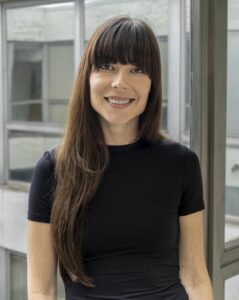
Fellow for Life Katie Ellison, Ph.D., RDN, LDN, a postdoctoral scholar in the University of Alabama at Birmingham’s Department of Family and Community Medicine, was recognized earlier this year with the Science for Public Good Fund Award from the Union of Concerned Scientists on behalf of the Science Policy Advocacy Network (SPAN) at UAB, where she serves as treasurer.
The Science for Public Good Fund provides financial support for projects that advance equitable, science-based public policy, strengthen science advocacy, and help communities understand how policy decisions shape local outcomes. The program also emphasizes creative, collaborative efforts and prioritizes work that engages diverse audiences and community-based partners.
“Our team’s proposal focused on exactly that intersection of science, public engagement, and policy,” Ellison explained. “We wanted to create opportunities for researchers, trainees, advocates, and community members to come together around issues that affect Alabama directly. The award gave us the resources to support programming that highlights how science can inform public policy and how policy, in turn, affects people’s health and well-being at the local level.”
 Ellison and her team used the funds to partner with the American Cancer Society Cancer Action Network to help host an inaugural Research Symposium at Cancer Action Day.
“The goal was to strengthen connections between science and policy in Alabama by creating space for researchers and advocates to engage with one another around cancer-related priorities in our state,” Ellison explained.
The symposium featured a poster session, a panel discussion, and lightning talks, all designed to showcase the breadth of cancer research and biomedical innovation happening across Alabama.
“It was energizing to see investigators at different career stages sharing work that ranged from basic science to translational and population-level research,” Ellison shared. “One of the biggest highlights for me was seeing people from different sectors, including research, advocacy, and the broader community, come together in a shared conversation about the value of scientific research beyond the laboratory. The event underscored that research does not exist in isolation; it has real implications for prevention, treatment, access, and policy. That kind of exchange is exactly what we hoped to foster through this award.”
An Unconventional Fellowship Year
Ellison’s Albert Schweitzer Fellowship year was 2020-2021, during the COVID-19 pandemic. But that didn’t slow her down. Instead of focusing on a single project, she developed a set of interconnected initiatives to improve nutrition education, culinary skills, and access to healthy food in the community.
She worked with Cooking Well, a 501(c)(3) nonprofit; Village Market, a grocery store serving an underserved Birmingham community and food desert; and Live HealthSmart Alabama, UAB’s inaugural Grand Challenge initiative, which is focused on helping move Alabama out of the bottom 10 in national health rankings by 2030.
As part of her project, she developed “Next Steps”– a four-week curriculum for Cooking Well graduates, with modules focused on inflammation, type 2 diabetes, cardiovascular disease, and weight management, along with healthful recipes. She also adapted materials for virtual delivery during COVID and implemented evaluation tools, including surveys, testimonials, and purchasing-tracking infrastructure.
In partnership with Village Market, Ellison also negotiated price discounts to help launch a discounted healthy-food model and tracked its impact through monthly reporting.
“Between November 2020 and April 2021, the store sold 69,363 discounted healthy items, which gave us a meaningful way to assess uptake and community reach,” Ellison recalled. “I also created recurring public-facing education content, including an ‘Ask the RD’ social media segment, and helped precept interns who supported program development.”
Preparation and Partnership
Though her fellowship year was unconventional, Ellison feels it helped prepare her for the work she’s doing today and hopes to continue in the future.
“It taught me how to build cross-sector partnerships, adapt programming to real-world constraints, think strategically about implementation and evaluation, and communicate health and science information in ways that are useful and accessible to the public,” she said. “It also reinforced for me that meaningful change often happens at the intersection of community engagement, evidence, and policy, which continues to shape my work today.”
Ellison plans to continue building her research program and ultimately wants to transition into a faculty role.
“I’m especially interested in work that bridges research, community engagement, and policy, and I see that as a central part of my long-term career path,” she said.
In the meantime, she will continue working on projects supported by the Science for Public Good Fund, including efforts to build stronger community partnerships and to educate the public about how policy affects science, and how science can inform policy.
“The award is intended to support science advocacy, public engagement, and equitable science-based policy efforts,” Ellison said, “and I’m excited to keep building programming that helps make those connections more visible and actionable.”